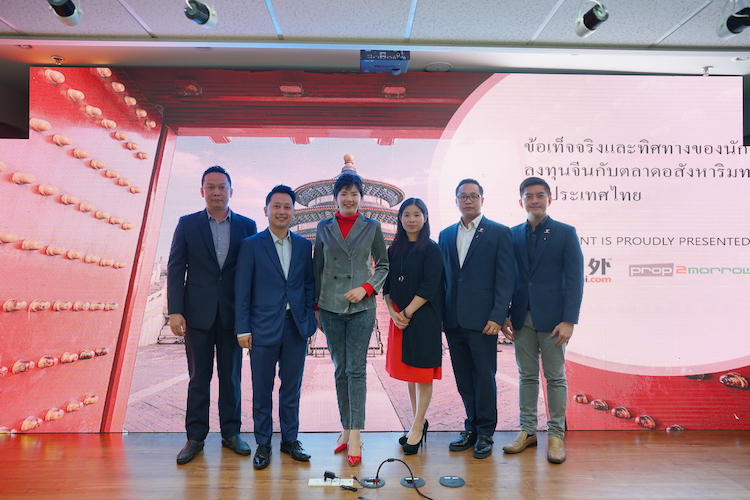
Launch of Juwai.com: Thailand's Leading Real Estate Buying and Selling Website Surges to the Top for Chinese Buyers
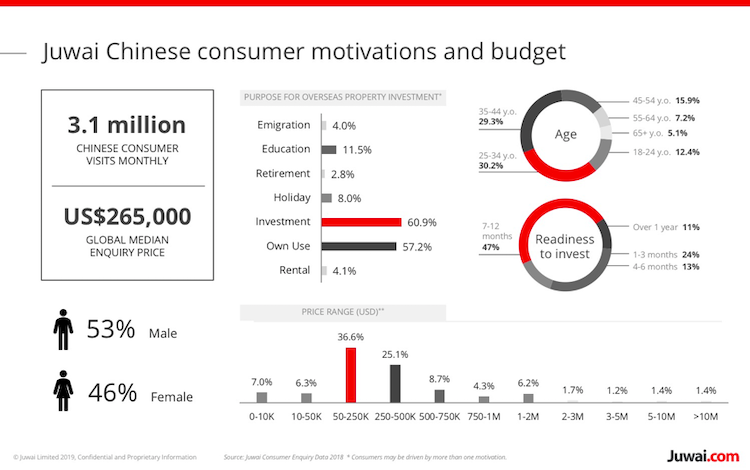
Carrie Law, CEO and Director of Juwai.com, noted that Chinese consumers tend to conduct thorough research and build trust before making investment decisions. Juwai.com reaches 90 countries worldwide, opening doors for Chinese individuals by serving as a real estate sales representative and providing information on international property markets. With 1.65 million investors, the average investment per person is approximately $770,493. According to Knight Frank, investments in Southeast Asia yield higher returns. In 2017, Thailand ranked third in inquiries and rose to first place in 2018, with the most searched locations being:
1. Bangkok
2. Pattaya
3. Chiang Mai
4. Phuket
5. Sattahip
6. Koh Samui

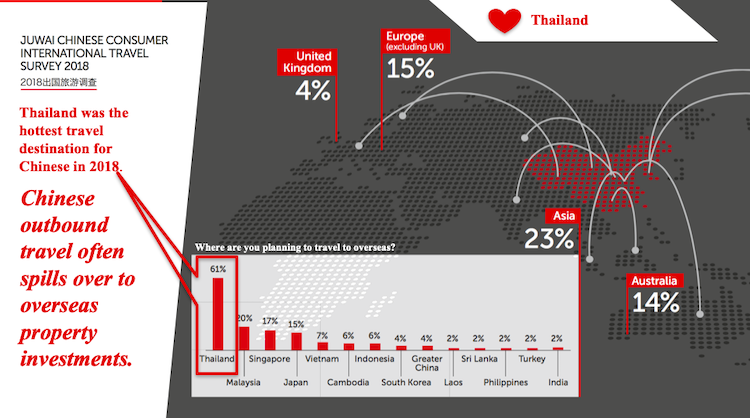
Communication channels include WeChat and Email. Educational factors also play a role in the decision-making process for Chinese investors. Typically, Chinese individuals invest after visiting as tourists, with Thailand attracting 61% interest. Juwai.com sees 3.1 million monthly visitors from China, with the lowest investment starting at $265,000.
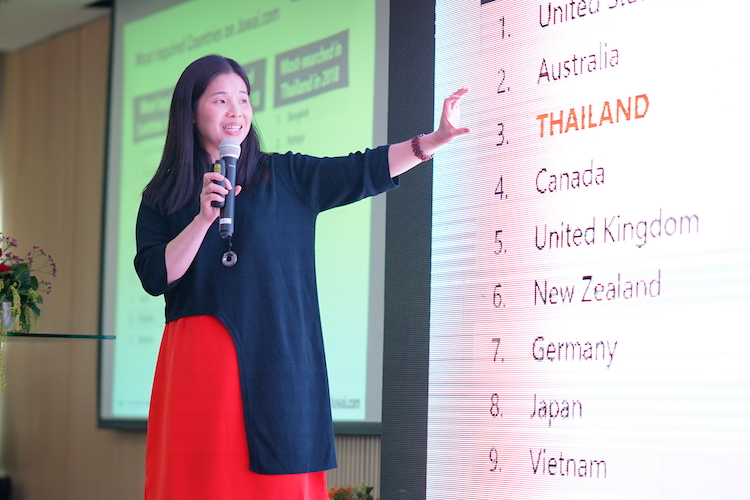
According to Juwai.com, the top website for Chinese seeking overseas real estate, it reaches approximately 3.1 million consumers monthly and lists over 2 million properties for sale across 90 countries. Data from 2016-2017 shows Thailand's popularity among Chinese investors rising from sixth place in 2016 to third in 2017, and in 2018, it became the top choice for Chinese buyers, followed by Australia, the USA, Canada, the UK, Malaysia, New Zealand, Greece, Japan, and Germany.
Recent data from 2018 indicates that the USA remains the most popular investment destination for Chinese investors, valued at $30.4 billion, followed by Hong Kong at $16.2 billion, Australia at $14.1 billion, Thailand at $2.3 billion, and Malaysia at $2.0 billion.
“Thailand ranks fourth in real estate investment value, with Bangkok being a prime location for property investors. However, Bangkok currently faces air pollution issues, which may deter Chinese buyers from visiting. Another factor attracting Chinese investors to Thai real estate is the continuous development of infrastructure, enhancing confidence in long-term economic potential,” said Ms. Carrie.
According to Juwai.com, Chinese and Hong Kong investors have purchased 15,000 units of real estate in Thailand, accounting for over half of all foreign investors in the country. On average, Chinese and Hong Kong buyers spend about 5 million baht per unit, with total investments in Thai real estate reaching 75 million baht in 2018. The top investment locations for Chinese investors in Thailand are Bangkok, followed by Chiang Mai, Pattaya, Phuket, and Sattahip.
“We have never seen such high demand from Chinese buyers for Thai real estate. This reflects the quality of products developed by real estate businesses, along with their investment vision and commitment to improving quality of life. Additionally, various factors are driving Chinese buyers to consider Thailand due to its diverse pricing compared to other countries, along with strict regulations from Beijing and limited investment opportunities within China,” Ms. Carrie concluded.
Ms. Kunthirat Phakwatklaileard CEO, Thailand e-Business Center (TeC) Project collaboration with Alibaba Business School Secretary General of the Thai Digital Association MD of Joyfulness Co., Ltd. stated that successfully conducting business in China would pave the way for entrepreneurs. The reason for targeting China stems from the term 'China.'
The total product volume across all platforms amounts to 314.3 billion yuan, a 23.8% increase from last year. Tmall holds 68% of the market share, while other platforms are gaining ground. A new player in the e-commerce scene is Pinduoduo, which has a 3.0% market share. JD.COM, the second-largest player, also had a record-breaking year with a GMV of 159.8 billion yuan, increasing its market share to 17.3%.
“This is why Thailand should promote business in China. Thailand stands to benefit from boosting its GDP and reducing production costs while improving product quality. Additionally, there are opportunities to learn technology from China to further develop Thailand,” she added.

TeC can provide consulting services for doing business in China, starting from documentation to methods of conducting business, especially online, which is highly popular among Chinese consumers. One of the most effective tools is WeChat, which has seen explosive growth, from 50 million users in 2011 to 963 million in 2017, within just six years,” Ms. Kunthirat stated.
Mr. Surachet Kongsip, Real Estate Market Researcher mentioned that previously, Chinese buyers tended to purchase condominiums in Thailand in familiar areas or regions with a high Chinese population, such as Ratchada, which is close to the Chinese embassy, and areas along the BTS and MRT lines for convenience. However, recently, the selection of condominium locations by Chinese buyers has changed due to various factors influencing their decisions and increasing the attractiveness of different areas for Chinese investors, such as:
1) Developers are increasingly reaching out directly to Chinese investors, resulting in positive responses for projects outside previously popular areas.
2) Thai and Chinese brokers are presenting various projects for sale in both Thailand and China, familiarizing Chinese investors with new locations.
3) Chinese developers are also promoting various areas to increase awareness among Chinese buyers.
4) China's strong online system enhances awareness among Chinese buyers, allowing them to effectively research different locations in Bangkok, along with numerous real estate websites providing insights into market conditions.

The current condominium market in various locations or other related matters is beneficial for buying and selling condominiums in Thailand.
Thus, it is believed that in the future, Chinese buyers will spread across all areas of Bangkok and tourist provinces, not just Pattaya, Phuket, Chiang Mai, Koh Samui, Hua Hin, and Krabi. New potential locations may even extend to secondary cities in each region.
“The expansion of the Chinese buyer group in the future may be influenced by other factors, such as the trade war with the United States, which could affect China's economic situation, the depreciation of the yuan, government control measures in China, and the strict regulations of the Thai government. However, ultimately, Chinese people will continue to be interested in visiting Thailand and purchasing real estate here, despite current challenges from both Thailand and China,” Mr. Surachet concluded.